PROJECT · 2025
Holidaze
Editorial travel platform & UX systems exploration
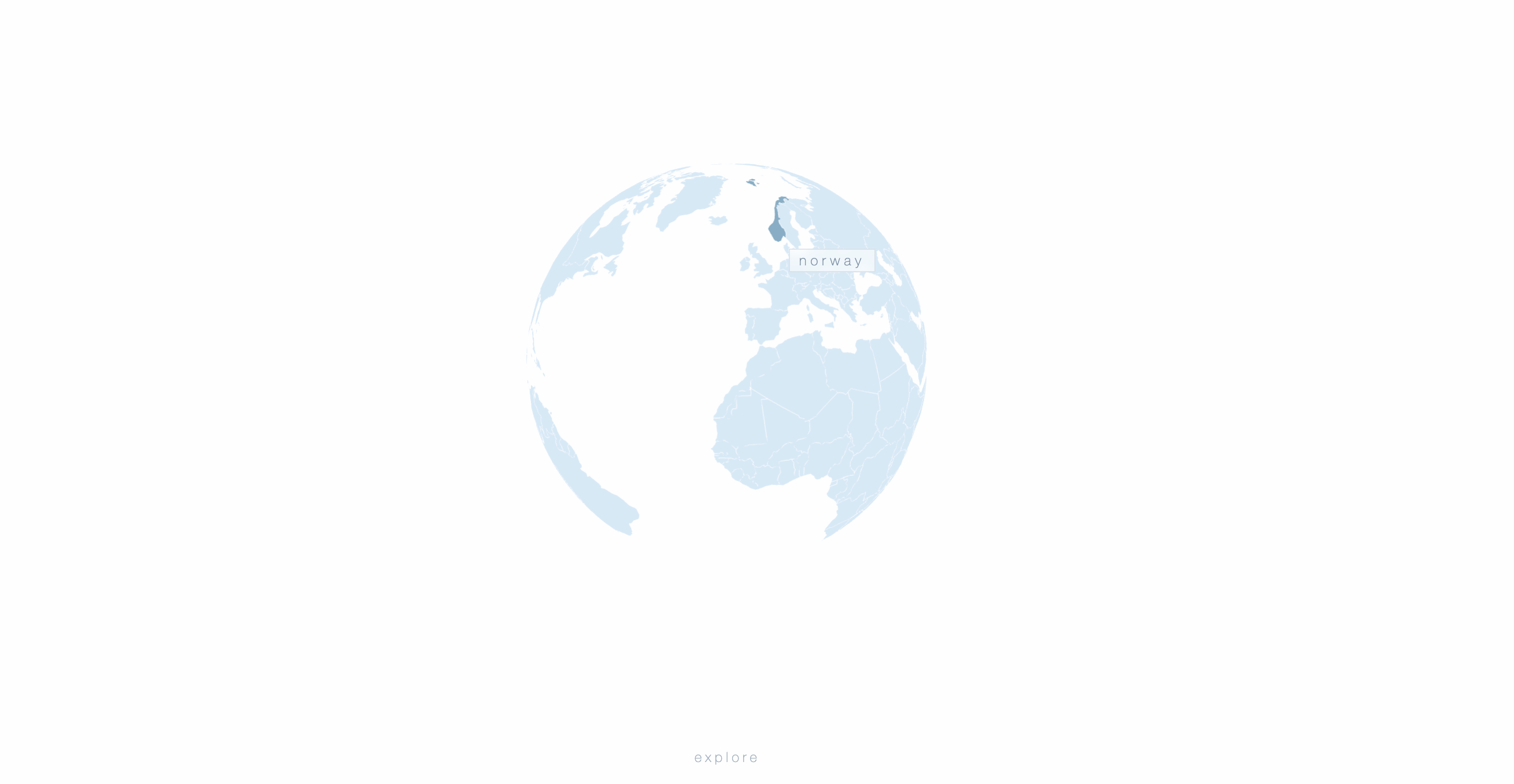
A conceptual travel platform exploring how digital services can evolve alongside digitally mature users. Holidaze rejects persuasive UX patterns in favor of clarity, autonomy, and intentional interaction, treating users as informed participants rather than passive consumers.
CONTEXT
Holidaze was developed as both a booking platform concept and a critical exploration of contemporary web design. The project emerged from the hypothesis that the future web should empower users rather than persuade them, favoring clarity and trust over conversion-driven patterns.
DESIGN PHILOSOPHY
Rooted in Web3 design principles, the interface avoids traditional visual hierarchies, urgency cues, and funnel-based CTAs. Instead, it introduces flat information structures, minimal contrast, and ambient motion to create a calm, non-directive browsing experience.
INTERACTION & MOTION
A slowly rotating 3D globe functions as the primary navigation surface, allowing users to explore destinations spatially rather than through menus. Subtle motion, scroll-based scaling, and hover interactions add liveliness without breaking the minimalist intent.
SYSTEM ARCHITECTURE
The platform is structured around modular, purpose-driven components. Venue data is fetched, filtered, and rendered through a scalable system supporting country-based discovery, search, and attribute filtering, with a clear separation between logic and presentation.
INTENTIONAL TRADE-OFFS
Some conventional accessibility and performance optimizations were deliberately softened to preserve design intent. These decisions were validated through Lighthouse audits, WCAG checks, and real user testing, confirming usability despite lower visual hierarchy.
OUTCOME
Holidaze demonstrates that digital experiences do not need to rely on urgency or persuasion to be effective. The project delivers a calm, trust-based interface that encourages intentional action, offering a vision for a more mature and respectful web.